![]() |
Royal Deeside : Victorian Buildings in Ballater |
![]() |
|
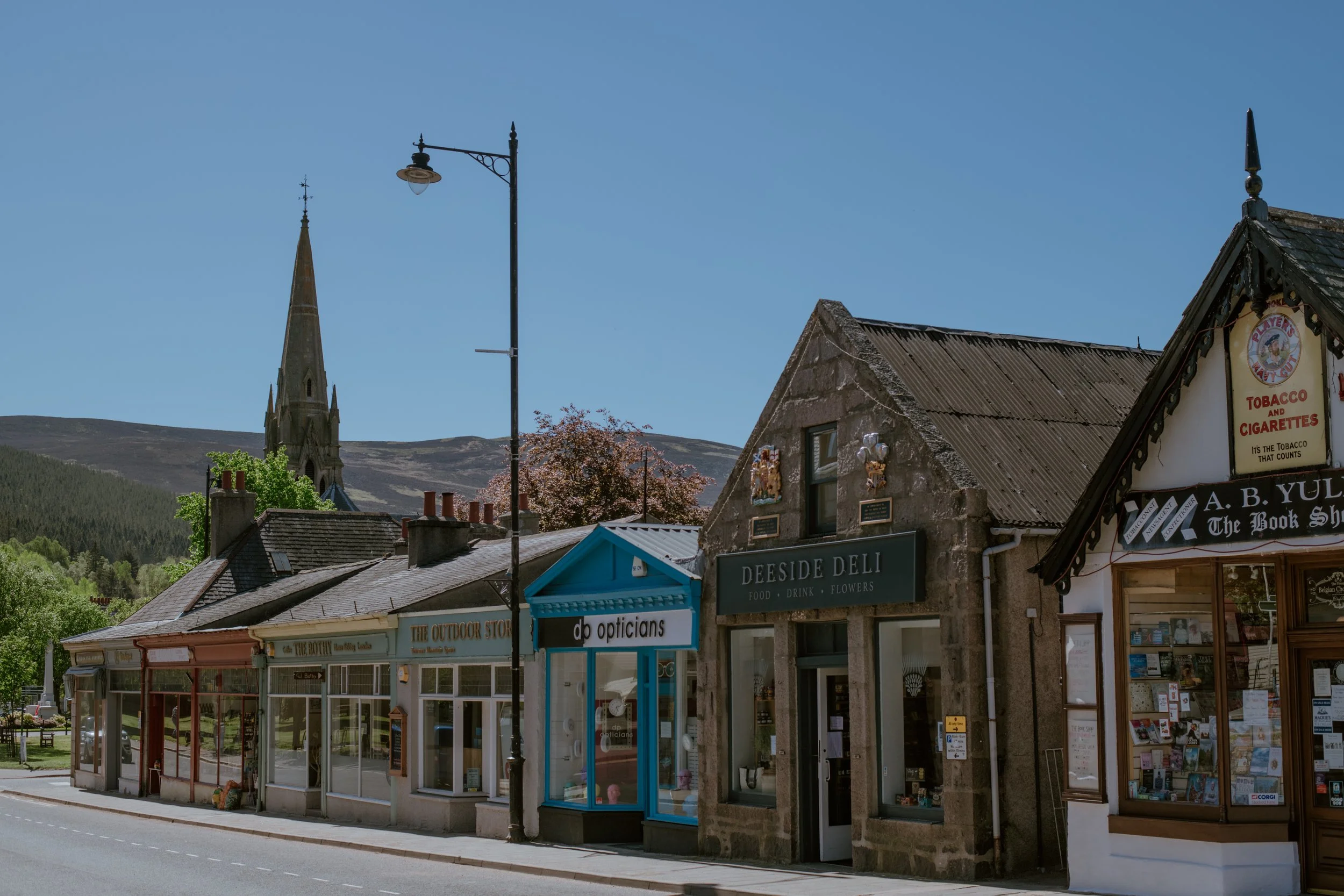
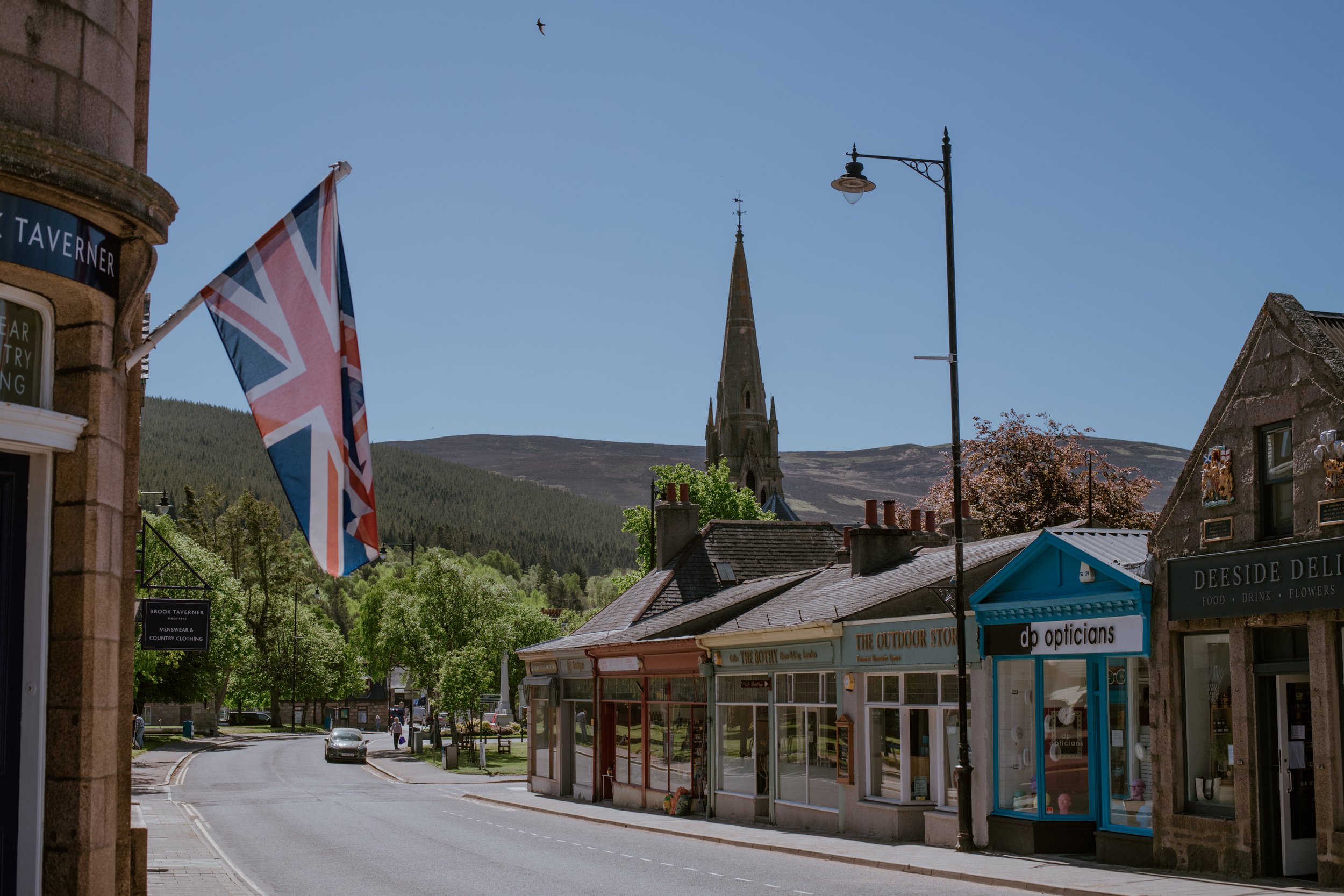
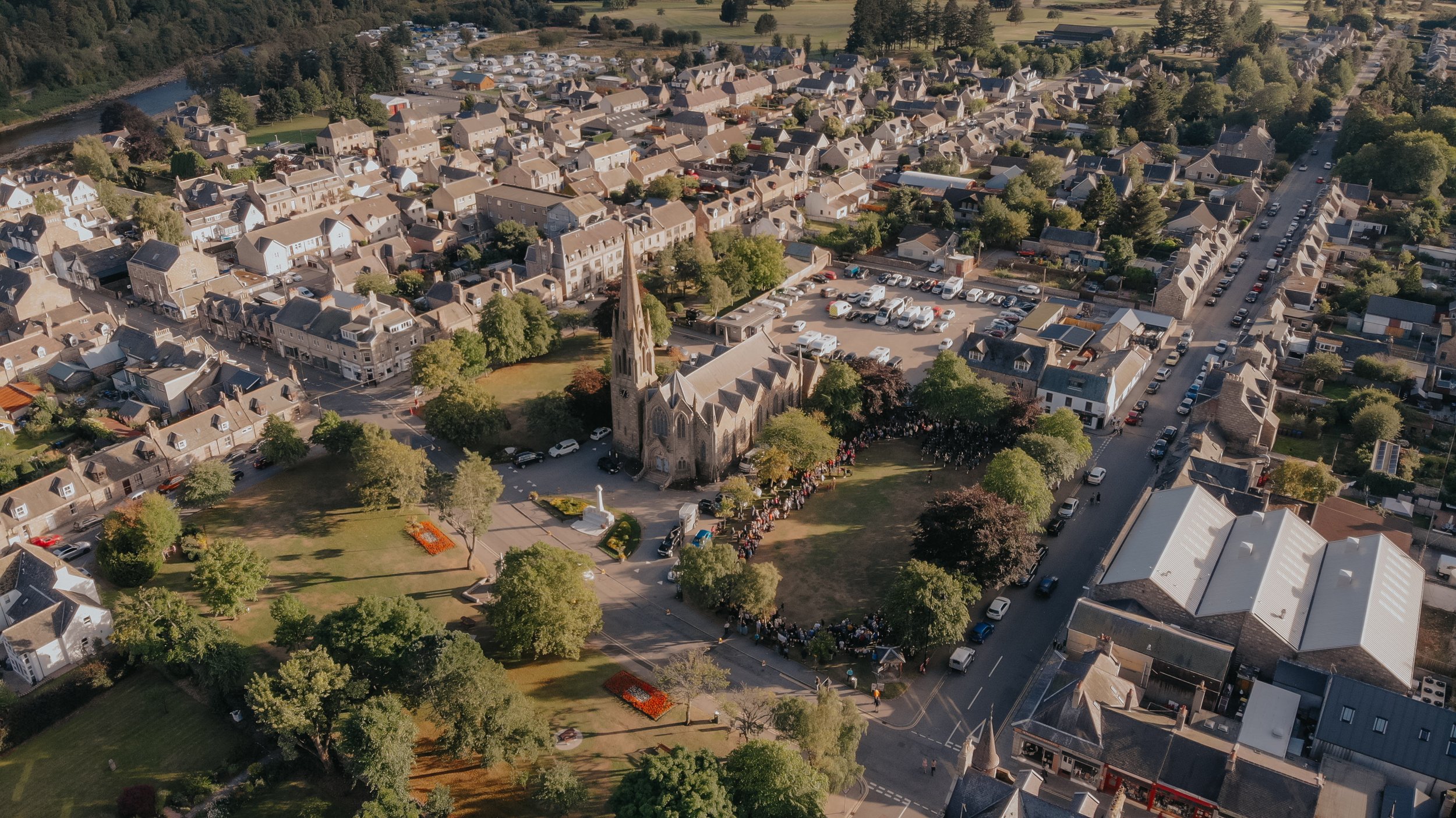
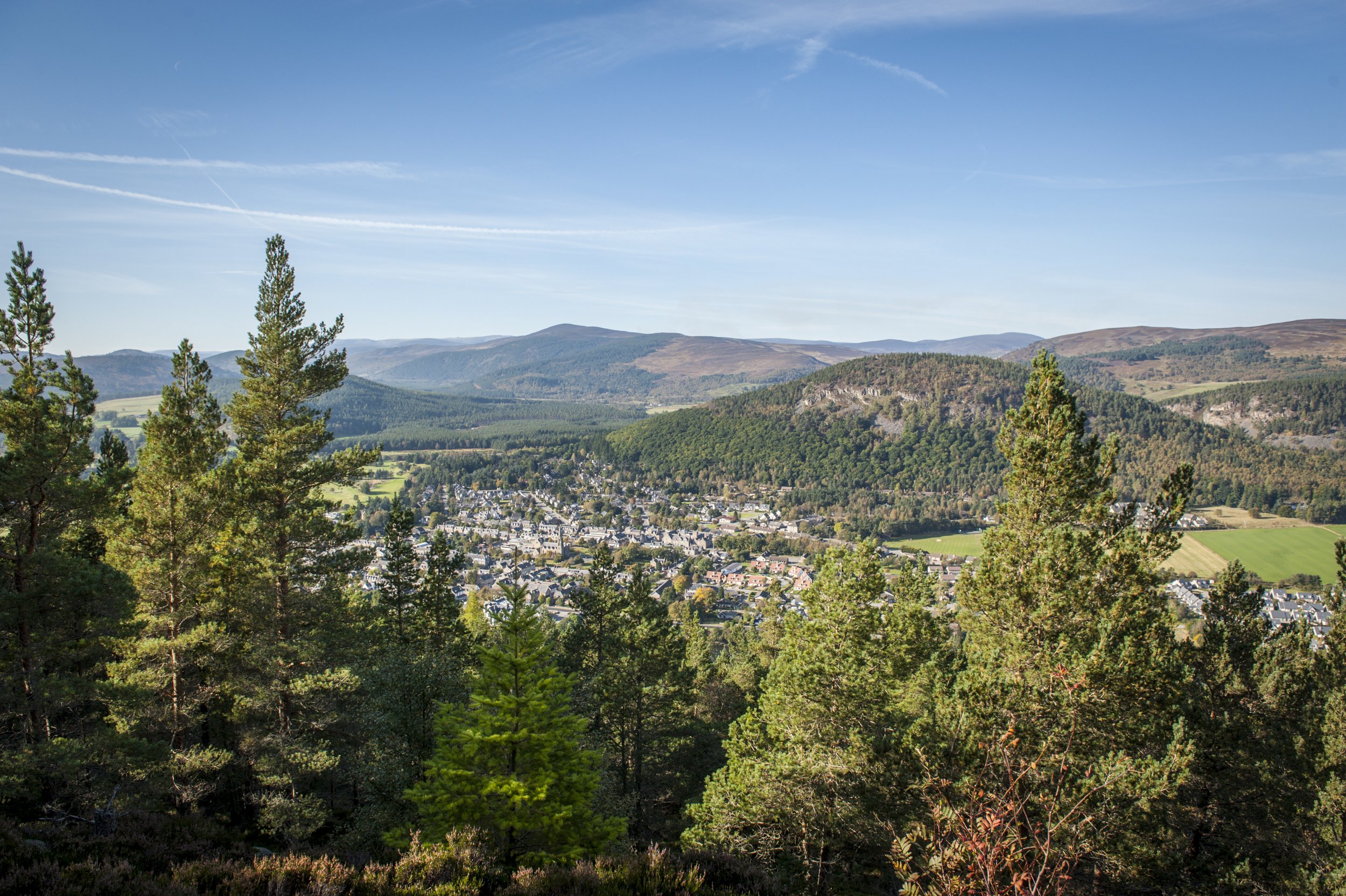
Ballater is a relatively modern town. It did not exist before 1790 and much of its growth took place in the middle years of the 19th Century. This is why two features of Ballater stand out - the array of fine Victorian stone-built houses and cottages and the fine straight roads that make up the village centre. Much of the centre of Ballater is today a conservation area. On this page Sheila Sedgwick tells the story behind the construction of some of the buildings. These range from the determination to have a bridge across the River Dee to the generosity of Alexander Gordon. Stories about buildings are also contained on other pages in this section most notably in Church matters where the details are given of the varios churches in Ballater. |
|
| Accessible sub-menu |
Buildings. Pictures of the 1840's and 1850's show very little development in Ballater, except by the river, in the vicinity of Dee Street. As Deeside was gained popularity through Royalty and the Railway boom, building styles became more ornate. The 'baronial' building of the Victoria and Albert Halls with its imposing tower, is an excellent example of the work of William Duguid and Sons, Builders and Contractors. They built many of the fine edifices remaining today, like the Auld Kirk. Darroch Learg is of the same period but has later additions. The tree-lined Braemar Road was the home of the 'better off', most of the houses facing the road. (Several of these houses are now hotels.) Balgonie, formerly called Beauvais, was built in 1898 by James Jamieson, a lawyer. Craigendarroch was the home of the Dundee family of Keiller. The Towers (St. Andrew's Nursing Home) and Craigendarroch House reflect the confidence and prosperity of some residents. Many folk, of course, were not in such comfortable circumstances. A great many houses had little 'sleep-outs' (cottages) at the back to which the family retired to allow summer visitors the use of the main house. Ballater’s
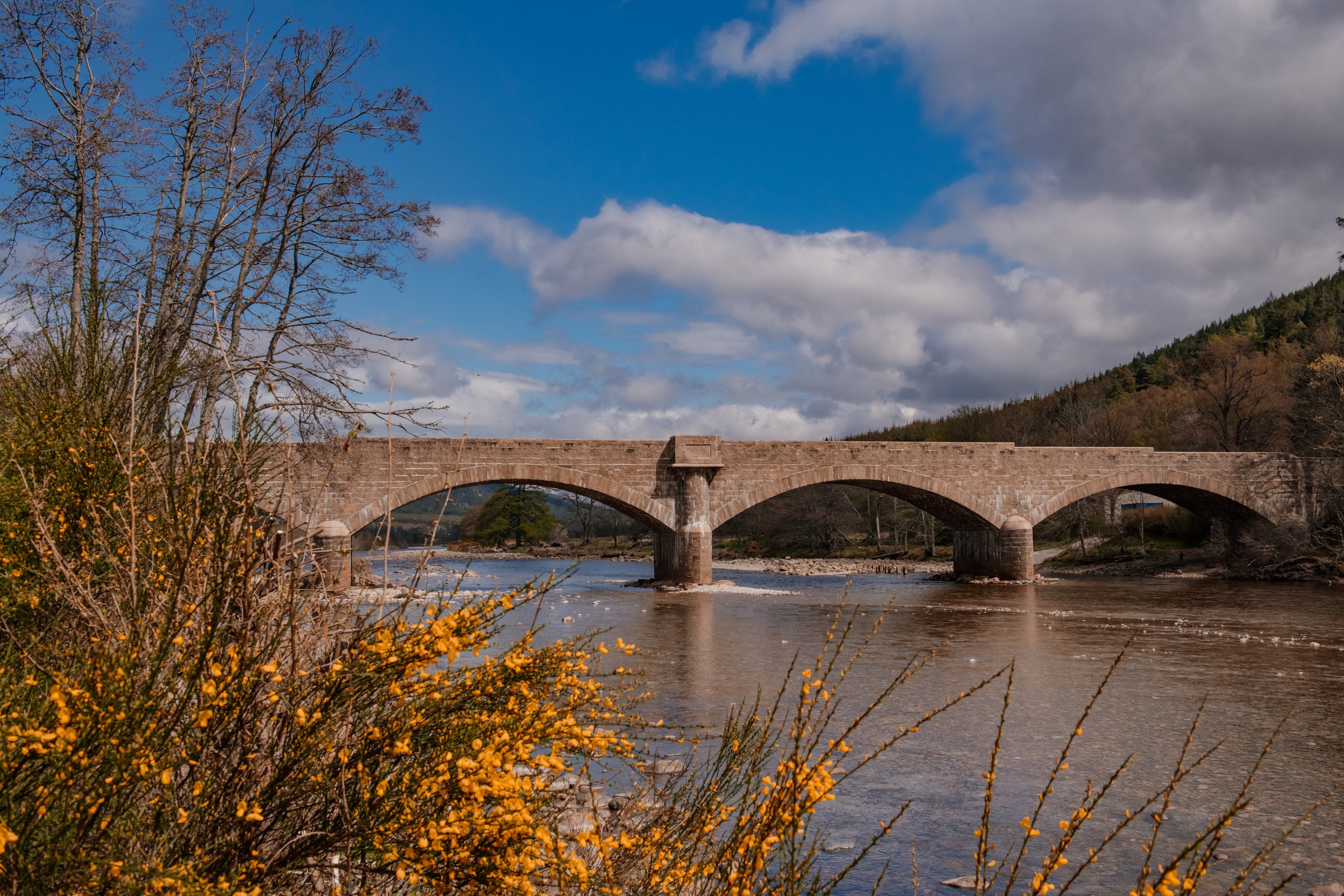
Bridges. Imagine the inconvenience for the Ballater residents when there was no bridge linking the north and south sides of the Dee! The "boat" was used, and in some places the Dee could be forded, but not when in spate!
Monaltrie
Arms The 'square' near the Hotel was the original centre of the village.(Bridge Street did not exist at first.) Stage-coaches stopped there and the whole area was bustling, with stabling, etc. Many young village lads had jobs as ostlers, porters and general workers. In 1850 the Royal Mail Coach left the Royal Hotel in Union Street, Aberdeen, for Braemar, at 7a.m., stopping for a while at the Monaltrie. The whole journey took 9 hours, (allowing for refreshment stops), according to the diary of James Farquharson, a prosperous London merchant with roots on Deeside. A coachman published a description of Ballater in 1830. It was written by Joseph Robinson. "The inn, the Monaltrie Arms, is at the south east comer of the square, just on the bank of the river". Sketches of around 1856 do not show the building as it is today. The present building dates from about 1860, and stands on the foundations of the original Monaltrie Arms. The Hotel and the accompanying farm, Cornellan, formed a complex that provided local employment. The farm used to provide the Hotel with all its produce, including game. The present McEwan's shop is on the site of the old Hotel laundry. The kitchen garden was across the road, just beyond the present Riverside Garage. Tinkers camped by the river, beyond the old laundry and gave their name to the Bar that is now a private house. Even when another bar opened, it closed half an hour after the last train, so everyone rushed to the 'Tink'. The
Railway.
Victoria
& Albert Halls. Victorian
Heritage. |
| Top of Page |
This
website is maintained for the benefit of the residents of Royal Deeside, Aberdeenshire,
Scotland by
Ballater
(RD) Ltd, a charitable company limited by Guarantee.
Copyright © 2003-2010 Ballater (RD) Ltd